


Community Resilience
Building the connections that help Porirua thrive.
-
Community Resilience Kaupapa Group
The Community Resilience Kaupapa Group brings providers, iwi, and community leaders together to build resilience to adverse weather events through better connected communities.
If you care about improving community resilience and connection and want to be part of the solution, we’d love you to join us.
-
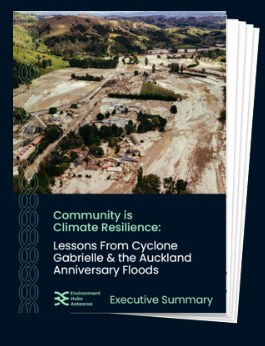
Community is Climate Resilience: Lessons from Cyclone Gabrielle & the Auckland Anniversary Floods
After Cyclone Gabrielle, communities came together and mobilised incredible responses to support one another. This research spoke to hundreds of community responders to find out their learnings; what worked, what didn't, and what changes they want to see made to better support community responders.
This report presents findings and a series of recommendations for building future resilience.
-
Social connectedness and well-being
Social connections play an important role across many aspects of people’s lives, from finding employment and getting advice on important decisions, to receiving support during difficult times and having someone to enjoy life and relax with.
The Ministry of Social Development (MSD) commissioned this paper as part of the Families and Whānau Wellbeing Research Programme.
Why Resilience Matters
Resilient communities are those where people feel connected, supported and able to participate in shaping their collective future. Community resilience is not only about responding to emergencies or recovering from disruption. It is also about the relationships, networks and opportunities that enable people and communities to thrive in everyday life.
Community connectedness is a key foundation of well-being. When people know their neighbours, have trusted relationships and feel a sense of belonging, they are more likely to support one another, share resources, participate in community activities and work together to address local challenges.
These connections are built through everyday experiences, from whānau gathering at marae and neighbours looking out for each other, to people connecting through schools, sports clubs, churches and local community initiatives.
Strong community connections can reduce social isolation, strengthen belonging, improve access to support and create opportunities for people to contribute to their communities. They also provide an important foundation during times of uncertainty or disruption. Whether communities are facing economic pressures, social challenges, adverse weather or other emergencies, trusted relationships and established networks make it easier to share information, mobilise support and respond collectively.
We are focusing on strengthening community connectedness as a foundation for everyday well-being, collective action and resilience across Porirua.
Evidence That Tells a Story
Findings from ‘Community is Climate Resilience’
“Community responders undertook a wide range of activities during and after the North Island Severe Weather Events, including evacuations, welfare checks, food and essential goods distribution, clean-up and silt removal, temporary accommodation support, and long-term recovery assistance. Marae were consistently highlighted as crucial to the response, valued for their inclusivity, cultural grounding, logistical capacity, and ability to meet diverse needs. Their role underscored the importance of Māori leadership in disaster resilience.”
“Strong, enduring social networks were a key enabler. Trust-based relationships within communities facilitated information sharing and collective action. By taking a people centred approach that prioritised unconditional support, community responses became a focal point for the outpouring of kindness from the wider community, and provided a space where people could come together for more than just material support. Participants consistently emphasised the value of flexible, people-centred approaches that characterised the community response. Unlike more rigid institutional processes, community responses were able to adapt quickly, prioritise dignity and care, and respond holistically to real-time needs on the ground.”



What We Are Doing
We are focusing on strengthening community connectedness across Porirua by bringing together organisations, local leaders and communities to build on the relationships, networks and activities that already support community well-being. We recognise that connected communities are built through everyday interactions, shared spaces, participation and collective action. By working together, we can identify opportunities to strengthen these connections, reduce barriers to participation and support communities to lead the changes that matter to them.
Our Approach: Kaupapa Groups through the Porirua Community Leaders’ Forum
Porirua Community Leaders’ Forum (PCLF) exists to foster relationships, strengthen local connections, and create a shared space for community-led action and learning. It brings together Porirua’s diverse leaders across iwi, community, Pacific, migrant, business, education, and social sectors to identify shared priorities and coordinate collective impact for our city.
As part of this model, kaupapa groups are established to move ideas into tangible action. Each group focuses on a specific area of community priority such as kai, housing etc.
The Community Resilience Kaupapa Group is a collective space to tackle barriers to access and shape practical solutions for our whānau focused on strengthening community connectedness and tackling adverse weather events.
If you would like to be part of the solution, we’d love you to join us.
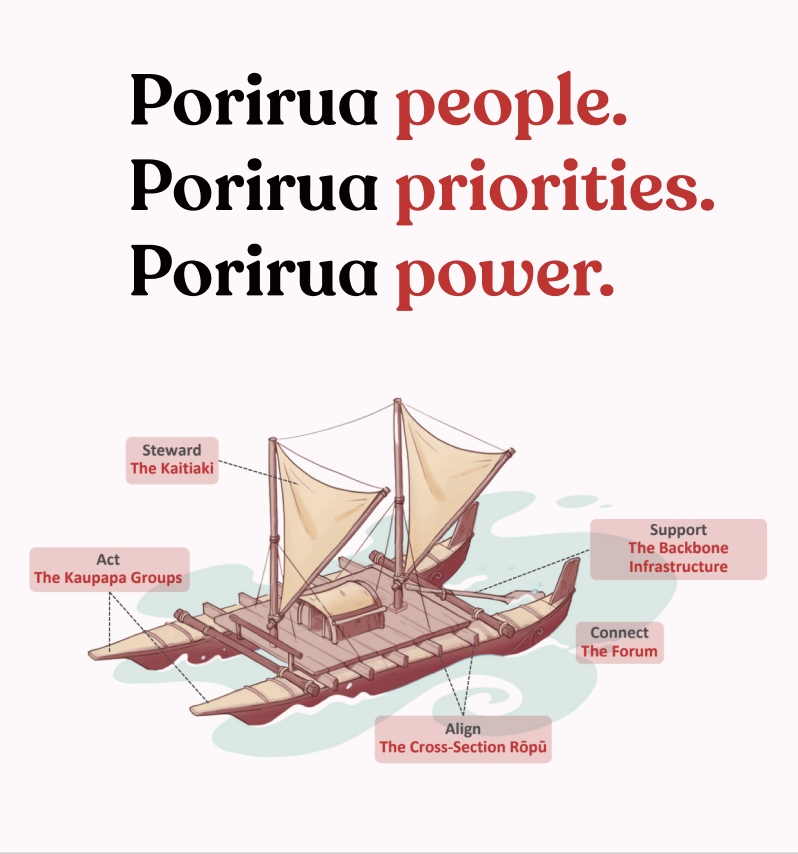
Read more about the Porirua Community Leaders’ Forum in the PCLF Operating Model.
Porirua moves forward because people like you step in. We need skills, time, and resources to keep the momentum going.
How Can You Help

Volunteers for workshops
Help facilitate conversations and keep sessions running smoothly.

Catering and kai
Sponsor food and drink for our next gathering.

Communications support
Design, write, or help spread the word about what we are doing.